
Comprehensive test management solution for complex challenges.

Test Management Software: Competitive Advantage or Cost Driver?
andagon Team
in
Test Management Software
Test Management
Software Quality
Test Automation
Quality Assurance
·
24.08.2026
·
13 min. reading time
Test management software does not just bring order to day-to-day testing. It provides the transparency needed for informed management decisions. Anyone responsible for releases needs visibility, control, and reliable decision-making instead of gut feeling. Without a solid software testing strategy as a guardrail, budgets disappear into tickets, meetings, and rework. With the right platform, risks become measurable and quality becomes manageable. We show when test management software creates competitive advantages and when it turns into a cost driver. Read on if you are looking for reliable decision-making and effective governance - not just another tool. By the end, you will understand how test management software can support better decisions and under which conditions it becomes a worthwhile investment.
What Is Test Management Software?
By “test management software,” we mean platforms that bring together requirements, test cases, defects, risks, and quality metrics in a single view. Such solutions not only support the day-to-day execution of tests but also provide decision-makers with reliable information about quality risks, progress, and release readiness.
Test management refers to the organizational process of planning, controlling, and monitoring all testing activities. Test management software provides technical support for this process by consolidating information in a centralized location. Finally, governance describes the rules and decision-making processes that companies use to manage quality and risks based on this information.
Why Test Management Becomes a Management-Level Responsibility: Consequences for Test Management Software
Testing is no longer a downstream activity. It is a management issue for value creation, risk, and time-to-market. When releases cannot be delivered as planned, the roadmap becomes less reliable. Quality issues lead to rework, delays, and additional costs. Decision-makers today want verifiable answers: Where do we stand? What are the costs of unresolved defects? Which dependencies are blocking delivery? This is exactly where it becomes clear whether test management software delivers transparency and prioritization — or merely creates data waste and additional work.
From Gut Feeling to Reliable Governance
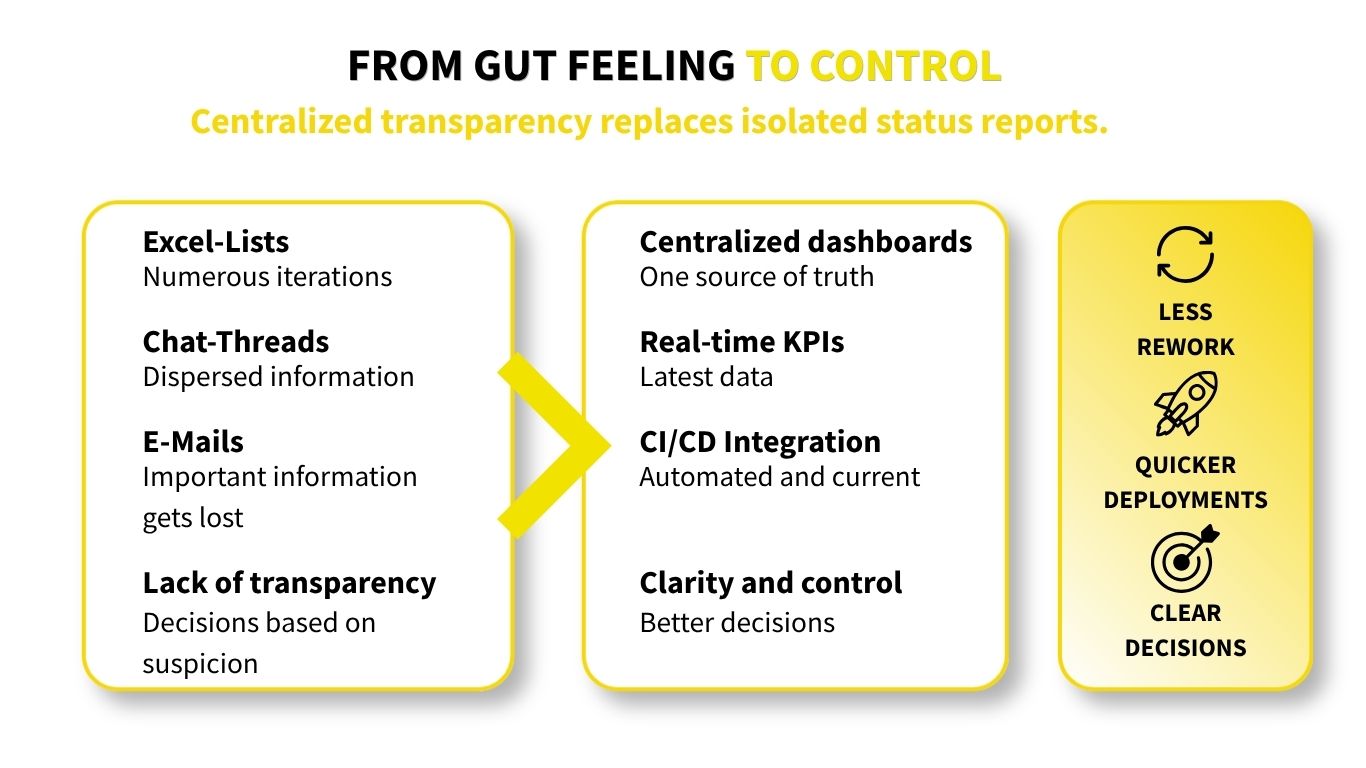
Many organizations rely on scattered spreadsheets, chat threads, and individual reports. This leads to inconsistent status overviews. Decision-makers are forced to act based on incomplete information. We recommend a single source of truth for test objects, risks, requirements, and coverage levels. This creates clear management questions: Which risks do we accept? Which do we transfer? Which do we actively mitigate before the next milestone?
Test Management Software as a Governance Enabler
A platform only creates value when it bridges the gap between technology and business. Critical metrics include risk-weighted test coverage, defect escape rate, and cycle time to release readiness. These metrics connect test cases with requirements, affected customer segments, and business risks. This creates a governance layer that executives understand and teams can manage.
- Clear ownership for every risk, test object, and decision milestone
- Standardized test design methods with risk weighting
- End-to-end traceability from requirement to defect
- Binding Definition of Done including quality criteria
Without this framework, every platform becomes nothing more than a ticket repository. With it, the platform becomes a management instrument. It is crucial that data is created where teams actually work. Automated synchronization with issue tracking and CI/CD systems prevents maintenance overhead, while a fixed-price test automation service enables predictable effort and fast results. The visible outcome: fewer arguments about numbers and more clarity for decisions.
Setting the Right Priorities
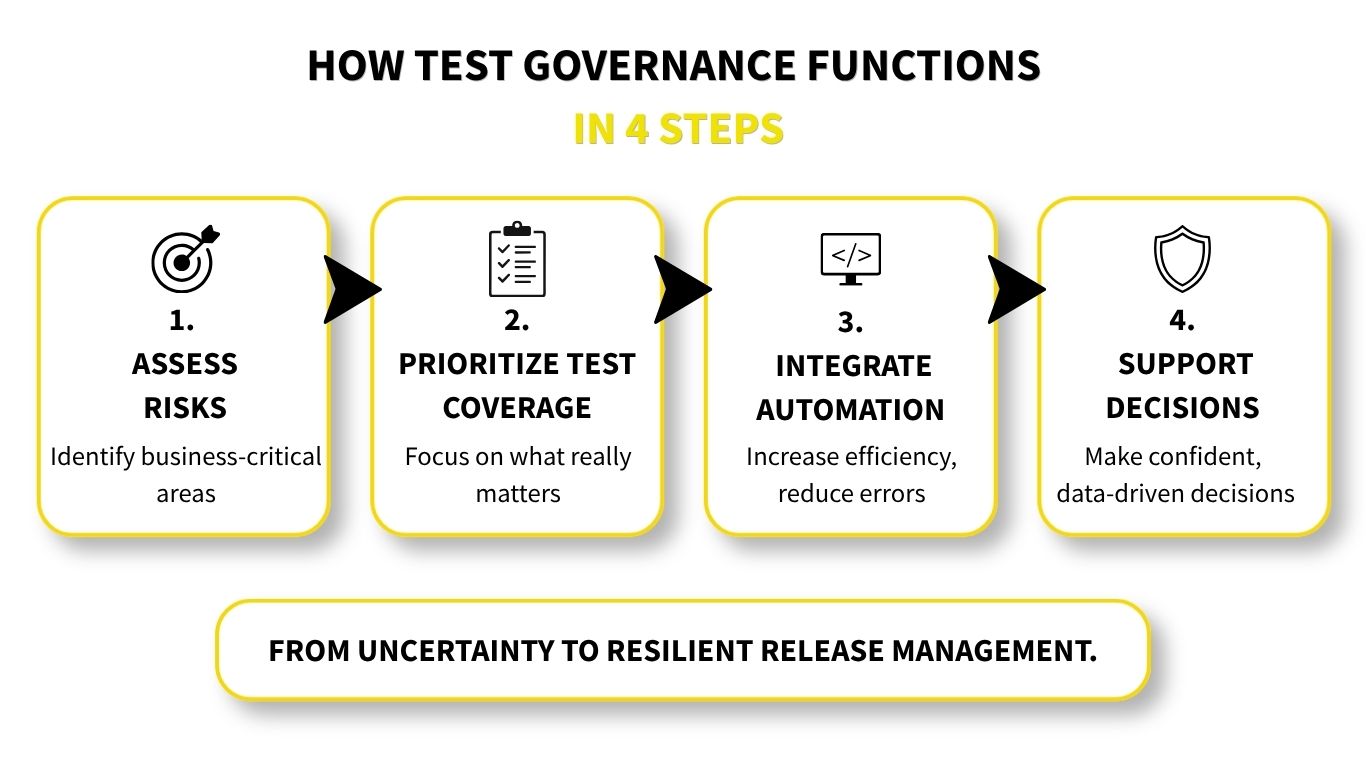
Start with the decisions you need to make, not with a checklist of product features. Start with three questions: Which decisions should become faster and more reliable? Which risks are business-critical? Which KPIs does management accept? These answers define the mandatory functions. Everything else is optional. This keeps implementation lean, makes benefits visible quickly, and ensures high adoption.
What CEOs Really Expect from Test Management Software: Control Instead of Feature Lists
CEOs rarely ask about test case editors. They ask about delivery reliability, cost stability, and reputation-threatening risks. They want a reliable risk assessment they can base decisions on. Test management software creates value when it enables decision-making in the boardroom and execution on the operational level. Otherwise, data is collected without improving decisions.
Decision Questions Instead of Tool Discussions
What does a delayed release cost per week? Which modules carry the highest risks? How reliable are regulatory commitments? A robust platform answers these questions with consolidated, auditable data. It translates technical details into business impact and makes options for action transparent. This helps leaders make informed decisions without resorting to micromanagement.
Test Management Software as an Early Warning System
Early warning is not just about highlighting issues after they occur. It requires signals, thresholds, and defined reactions. This includes coverage targets based on risk, defect drift across builds, targeted load and performance testing for critical systems, and stability trends for tests in the pipeline. When a threshold is exceeded, a predefined action plan is triggered — not endless discussions. This saves time and protects deadlines.
- Business-relevant metrics with clear thresholds
- Automated status aggregation across teams
- Binding escalation paths with clear responsibilities
- Management reports that prepare decisions
CEOs want leverage, not manual work. Reports, therefore, need to be generated automatically from the workflow. No weekends spent building PowerPoints. No conflicting versions. One source, one view, one decision. This makes the quality promise measurable and ensures budgets are focused on impact instead of administrative effort.
Control Without Creating Bottlenecks
Control does not mean slowing everything down. Control means identifying bottlenecks, avoiding side effects, and consciously accepting risks. Good governance accelerates delivery because it creates focus and reduces friction. Those who understand this no longer see testing as a cost center, but as an investment in reliable value creation.
Symptoms of Missing Test Management Software — and Their Costs
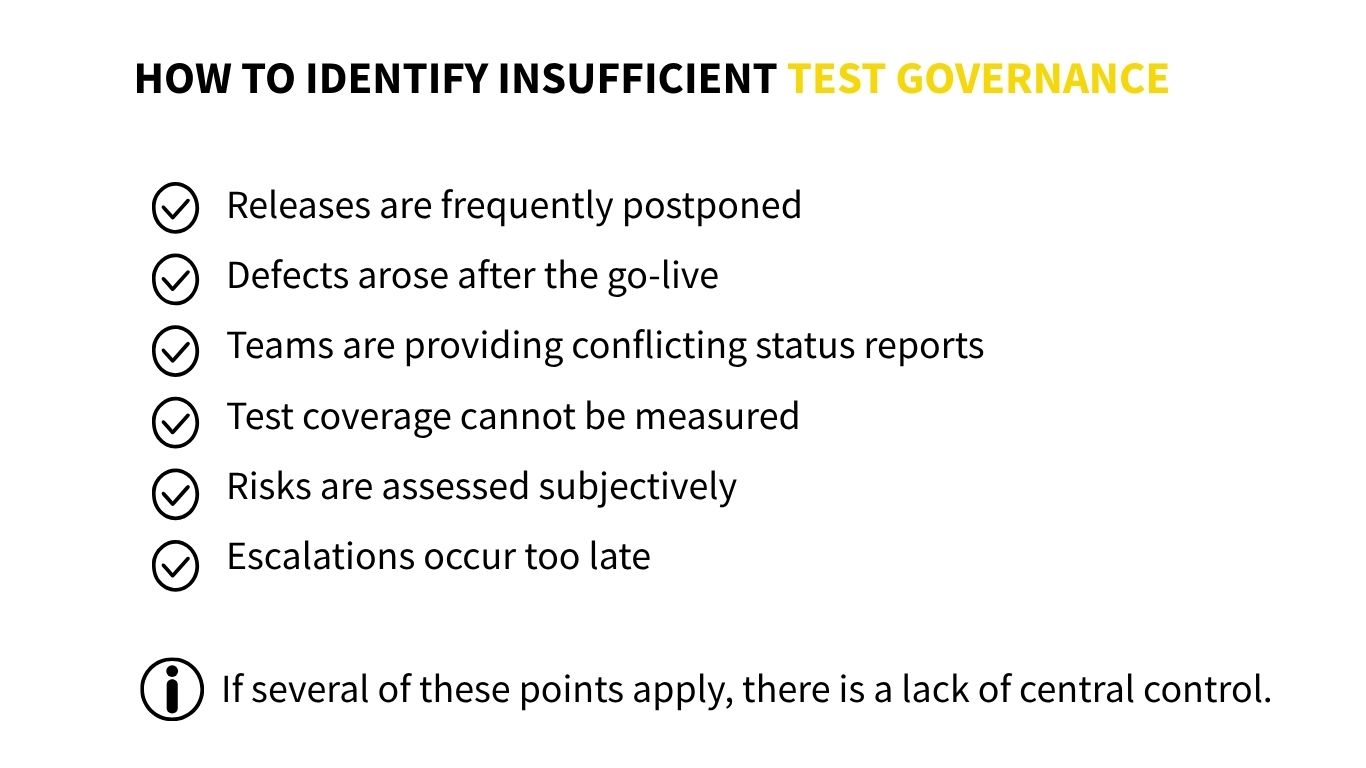
You can recognize missing governance by recurring patterns. Tests are scheduled too late. Defects are only discovered after go-live. Teams report contradictory information. Releases are delayed and create overtime work. These symptoms are not random. They are the result of invisible, unmanaged risks. Without a shared view of quality and risk, inefficiencies often remain hidden and lead to unnecessary costs and delays. Standardized quality assurance service packages with external test management can provide fast relief.
Making Hidden Waste Visible
Missing traceability creates duplicate work. Unclear acceptance criteria lead to endless loops. Undetected dependencies block teams. These losses appear normal until they are measured. A platform that links requirements, risks, tests, and defects identifies gaps early and prevents expensive rework later.
Test Management Software as a Catalyst for Accountability
Accountability emerges when processes are easy to apply and results are consistently visible. Mandatory fields for risk, coverage, and expected impact sharpen planning. Dashboards provide teams with immediate feedback. Making accountability measurable reduces chaos. Reducing chaos improves delivery speed and stability.
- Late defect detection and high rework costs
- Unclear responsibilities for critical defects
- Inconsistent status reporting across projects
- Overloaded experts and knowledge silos
These patterns escalate as complexity grows. More teams, more releases, and more integrations mean more coordination. Without a shared language and reliable metrics, friction increases disproportionately. The result is growing quality risk combined with declining predictability. Organizations that invest here not only reduce costs but also protect customer and stakeholder trust.
The Impact on Planning
Planning without quality governance overestimates capacity and underestimates risk. Better roadmaps emerge when testing effort is planned early based on risk and aligned with product goals. This allows you not only to shift deadlines but also to prioritize effectively. Fewer surprises, fewer unplanned escalations, and greater confidence in delivery.
When Test Management Software Becomes a Competitive Advantage
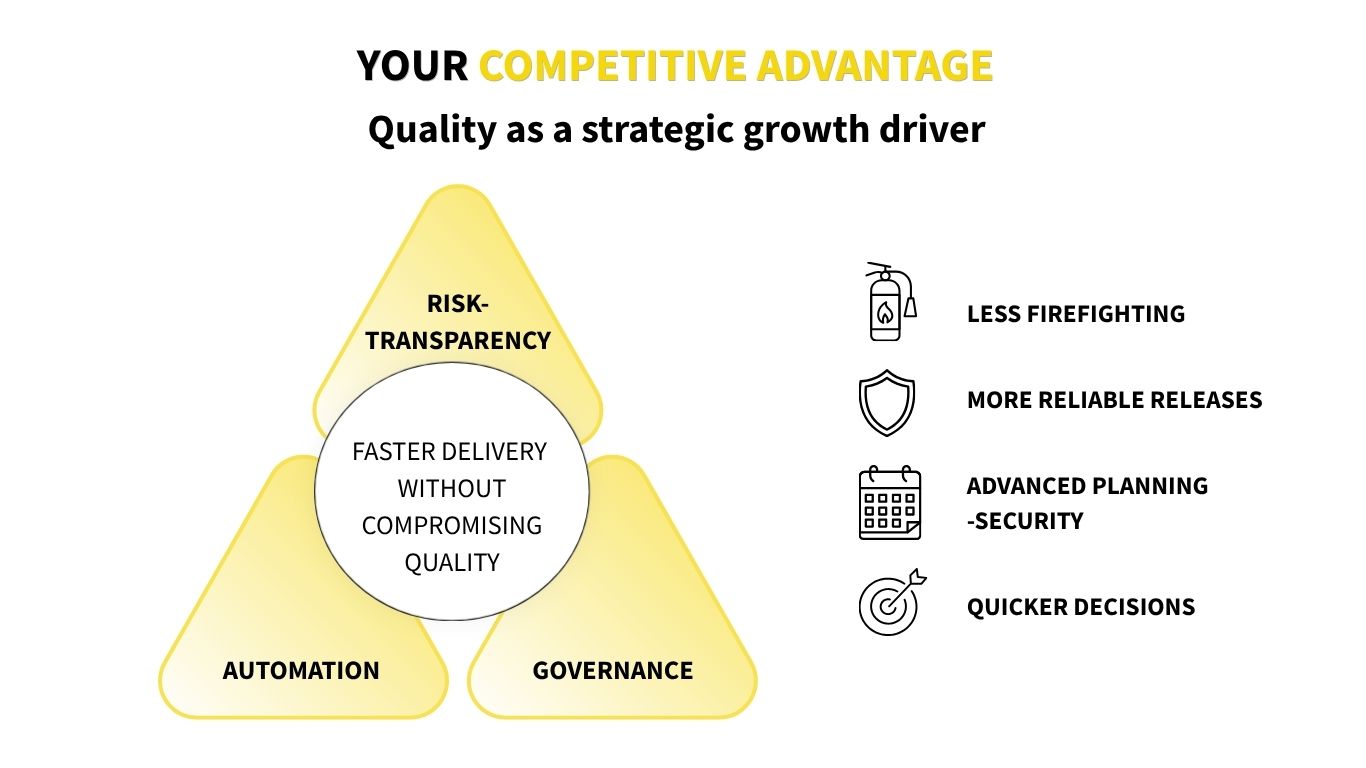
A tool alone does not create an advantage. A governance framework does. Competitive advantage emerges when you can deliver faster without risking quality degradation. This works when testing is automated, where it creates value, and performed manually, where judgment matters. Professionally implemented test automation with andagon can become a key lever here. The decisive factor is clarity about which risks must be removed faster to secure revenue and reduce support costs.
The Levers That Actually Matter
Three levers consistently create value: transparent risk evaluation, end-to-end traceability, and reliable automation signals. Organizations that combine these levers make bold, informed decisions. The goal is not maximum coverage at any price, but targeted coverage where defects are expensive or highly visible. This creates speed without flying blind.
Tailoring Test Management Software Correctly
Tailor the setup to your governance model. Define business criticality for each feature, mark regulatory obligations, and map test types to risks. Create a lean taxonomy that every team understands. Then orchestrate automation along the value streams. This creates clean signals from commit to release.
- Risk classes with clear quality criteria
- Align automation ratios with business risks
- Risk-based coverage targets for critical processes and customer segments
- Decision rituals before milestones with fixed agendas
Competitive advantage becomes visible under pressure. Organizations that deliver a clean hotfix despite bottlenecks win market trust. Those who quantify regression risks can accelerate in a controlled way. Those who understand support impact prevent escalations. This confidence does not come from more test cases, but from better decisions based on reliable data.
Maturity Instead of Size
You do not need enterprise scale to govern professionally. Mid-sized companies benefit especially strongly because transparency relieves bottlenecks early. Growth means managing complexity. Organizations that build maturity in quality assurance gain freedom: clean roadmaps, calmer nights, and predictable budgets. This is where the system behind the tool truly pays off.
ROI of Test Management Software: Costs Versus Decision Quality
ROI does not come from lower licensing costs. It comes from better decisions. When a platform creates clarity about risks, coverage, and maturity, you invest more precisely and avoid expensive mistakes. Do not measure ROI only in terms of hours saved. Calculate avoided outages, improved delivery reliability, and accelerated approvals. Only then do you see the real return.
From Cost Block to Value Driver
Defects discovered in production typically cost far more than defects identified during development. A delayed release costs trust and revenue. Every hour spent on unplanned incident resolution consumes resources that could be invested elsewhere. Organizations that make these costs visible recognize that quality assurance protects revenue. A robust platform helps organizations track and quantify these effects consistently.
Test Management Software and the Metrics That Matter
Focus on a few reliable metrics: defect escape rate, risk-weighted coverage, mean time to detect and fix, stability of automated tests, and release forecast accuracy. These metrics can be automatically fed from CI/CD and ticketing data. They reveal trends instead of snapshots and enable active governance.
- Monetize downtime and escalations
- Evaluate rework shares per release
- Track quality goals with a clear connection to business priorities
- Link risks with revenue and contracts
Set realistic benchmarks. The goal is not to eliminate every risk. The goal is to understand risks and make informed decisions. Known risks with a mitigation plan are preferable to uncertain situations without clear ownership. Organizations that focus on the right numbers reduce tool sprawl and reporting marathons. ROI becomes visible in operational flow: fewer surprises, faster decisions, and more stable delivery.
Transparency as a Multiplier
Transparency reduces transaction costs between teams. It lowers coordination effort, prevents duplicate work, and accelerates escalations. Every improvement reduces cost and increases speed. These effects compound over quarters. ROI is therefore not a one-time effect, but a sustainable organizational capability.
Implementing Test Management Software or Outsourcing It: Making the Right Make-or-Buy Decision
Whether in-house tooling or an externally managed testing service creates greater value depends on speed, integration capability, and governance. Do not buy a feature package. Buy the ability to make reliable decisions. If internal capacity is limited, experienced partners accelerate implementation and minimize friction. If strong domain knowledge already exists internally, operating the system yourself can pay off.
If only one of the criteria is not fully met, a focused assessment of the affected area is usually the best starting point. In many cases, individual gaps can be closed internally without outsourcing the entire setup.
The Three Evaluation Criteria
First, check whether your value stream is clear. Second, check whether you can seamlessly integrate the relevant data sources. Third, check whether new decision-making and coordination processes can be embedded within your organization. If the answer to two of these questions is “no,” you’ll gain both time and quality by seeking external support. If all the prerequisites are met, there are many reasons to build the system internally.
Pragmatic Integration of Test Management Software
Start small with one critical product area. Integrate issue trackers, CI/CD pipelines, and repositories. Define two or three metrics that management accepts and align them with the updated ISTQB Test Management Standards. Introduce fixed review meetings. Scale only once stability and value are proven. This avoids big-bang risks and secures early wins.
- Pilot project with clear goals and timelines
- Standardized data models and taxonomy
- Automated synchronization instead of duplicate maintenance
- Change enablement with training and coaching
External partners are valuable when speed, knowledge transfer, and neutral evaluation matter. The important point is ensuring knowledge remains within the company. Clear roles, documented decisions, and an exit strategy protect your independence. This ensures governance stays in your hands, regardless of who builds or operates the setup.
Vendor and Lock-In Risks
Plan export paths for data, open interfaces, and clear ownership from the beginning. Evaluate pricing models for scaling effects and hidden cost traps. Ask about migration scenarios. Organizations that address these topics early retain flexibility and avoid expensive dead ends.
Test Management Software as a Governance Instrument — Not Just a Tool
Even the best platform fails without consistent governance. Software provides visibility and data. Organizations create value by turning that information into informed decisions through clear responsibilities and structured processes. Organizations that internalize this build quality as an organizational capability, not as an activity at the end of the pipeline.
Build Frameworks, Not Checklists
A reliable framework defines how risks are evaluated, how priorities are set, and how releases are approved. It protects teams from political noise and enables focused work. Checklists help — but only as part of a lived governance model. Without active ownership and accountability, even well-designed processes can lose their effectiveness.
Test Management Software as a Shared Language
A shared language between development, operations, and management reduces misunderstandings. ISTQB and its certification levels provide proven practices and terminology as an integral part of quality management. When metrics and risk classes are understood and accepted, escalations become structured and short. This creates faster cycles without sacrificing quality. The tool keeps the language consistent; the organization brings it to life.
- Clear quality ownership per product
- Fixed decision milestones with defined criteria
- Transparent, auditable data foundation
- Learning from incidents through structured reviews
Organizations that consistently learn win in the long term. Post-mortems that search for root causes instead of blame increase maturity. Improvements flow back into standards. This improves not only testing but the entire system. That is the difference between simply using a tool and creating real governance.
Deliver Measurably Better Quality
Delivering better means keeping forecasts reliable, explaining risks clearly, and managing approvals without drama. When your metrics prove this, the organization gains trust. Trust does not replace control, but it makes control easier. This is where a focus on governance impact truly pays off.
From Tool to Governance: Your Next Step
Prioritize decisions, not features. Define which management questions your system must answer within six weeks. Align processes, data, and dashboards accordingly. Start lean, measure benefits, and scale only afterward.
Establish rituals. Short review cycles, clear escalation paths, and binding quality criteria create speed without blind spots. Keep the focus on risk, impact, and accountability.
Do you want to deliver faster, more reliably, and with less operational drama? We support you pragmatically with setup, integration, and governance design. Interested? Feel free to contact us.
FAQ
What Is Test Management Software?
Test management software is a platform for planning, executing, and evaluating tests. It links requirements, risks, test cases, and defects. The goal is effective governance and decision support: reliable metrics, clear responsibilities, and quick decisions throughout the value stream.
When Does Test Management Software Make Sense for Mid-Sized Companies?
It becomes valuable when releases are delayed, defects appear too late, or multiple teams need coordination. Depending on the organization, test managers or QA leads coordinate the test management process. Roles and responsibilities vary depending on project size and organizational structure. The exact role and responsibilities vary depending on project size. Once organizations manage two products or multiple delivery streams, the value increases significantly because transparency, governance, and automation noticeably reduce bottlenecks. Key focus areas include test planning, monitoring testing processes, and coordinating testing teams.
Which KPIs Really Matter for Test Management Software?
Relevant KPIs include defect escape rate, risk-weighted coverage, mean time to detect and fix, stability of automated tests, and release forecast accuracy. These metrics connect quality with business impact and enable fact-based prioritization. The ISTQB Test Management certification syllabus — from Foundation Level to Expert Level — provides an important qualification framework for test managers and their expertise. The Advanced Level teaches deeper knowledge in testing methods, risk management, and coordination of testing teams.
How Does Test Management Software Integrate into Existing Toolchains?
It integrates issue trackers, CI/CD systems, repositories, and documentation tools. Ideally, data is synchronized automatically. This creates reports without additional effort while teams continue working in their familiar systems and leadership gains a consolidated overview.
What Risks Exist When Introducing Test Management Software?
Common risks include feature overload, poor data quality, and a lack of established decision-making rituals. Effective countermeasures include a focused pilot project, clear metrics, open interfaces, and targeted change enablement through training and coaching.

